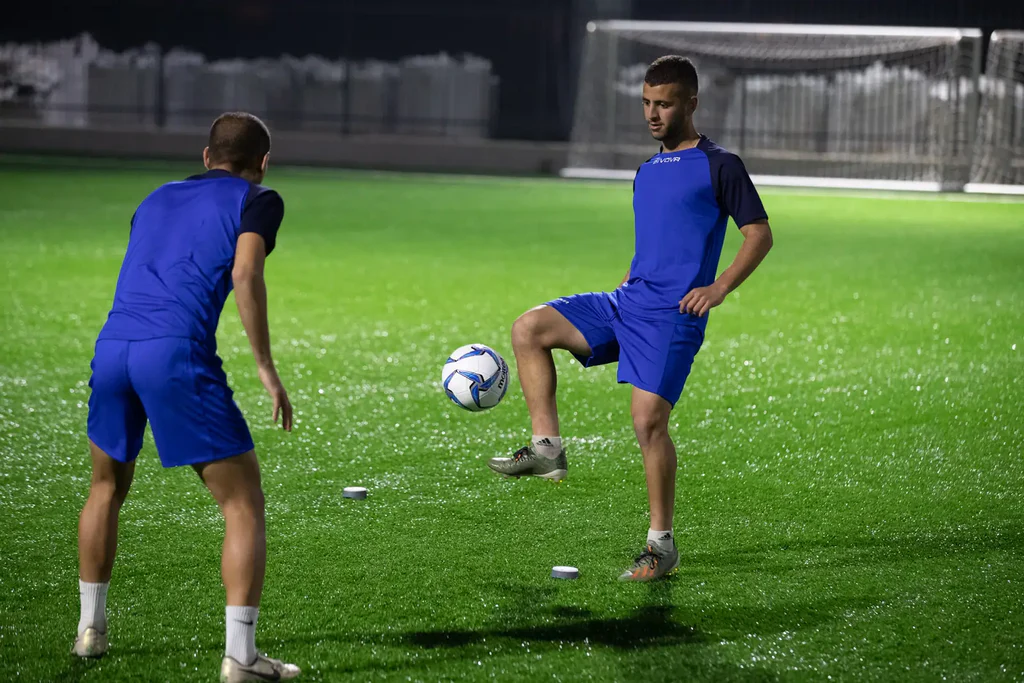
Soccer Fitness Exercises for Faster Field Movement
The fastest player on a soccer field is not always the one who wins the footrace. In many American youth leagues, high school programs, college clubs, and weekend adult matches, the player who moves best is the one who can start, stop, turn, recover, and repeat without falling apart after twenty minutes. That is where soccer fitness exercises matter most. They do not exist to make you look busy at practice. They train your body to handle the strange rhythm of the game: jog, burst, brake, shuffle, collide, sprint, breathe, and do it again. A player can run three miles and still feel lost on the field because soccer speed is not straight-line running. It is movement under pressure. Players who study training, recovery, and performance through trusted resources like sports performance coverage often learn one lesson early: fitness only helps when it matches the way the sport actually feels. Better field movement starts when conditioning stops looking like punishment and starts looking like the match.
Soccer Fitness Exercises That Build Game-Speed Movement
Better soccer movement begins with a simple truth many players ignore: the field does not reward steady motion. It rewards sharp changes. A player who can explode for five yards, slow down cleanly, and shift direction without losing balance will often beat a player with more raw speed. That gap shows up in Texas club tournaments, Ohio high school playoffs, and Sunday adult leagues in New Jersey. Game-speed fitness is not about running until your legs burn. It is about teaching your body to repeat useful actions while your mind stays clear.
Why short bursts beat long slow running
Long runs can build a base, but they do not teach your legs how to answer a sudden pass into space. Soccer asks for repeated bursts, not one smooth pace. A winger may jog for thirty seconds, sprint for four, stop hard, then sprint again after a deflection. That pattern feels messy because the game is messy.
A better plan starts with short sprint repeats. Set two cones five to ten yards apart. Sprint out, brake under control, backpedal halfway, then turn and sprint again. Rest long enough to keep quality high. Sloppy speed trains sloppy habits, and tired legs often lie to you.
Youth players in the U.S. often get pushed into distance running because it is easy to organize. A coach can send thirty kids around a track and call it conditioning. The problem is that a player may come back with better lungs but no better first step. Fitness must help you win the next ball, not merely survive the next mile.
How soccer speed training changes your first step
Your first step decides whether you arrive early or chase late. Good soccer speed training teaches the body to fire from different positions because matches rarely give you a perfect athletic stance. You may start from a side shuffle, a slow jog, a half-turn, or a flat-footed pause after scanning the field.
Use reaction starts to make this honest. Have a partner point left or right, drop a ball, or call a color. You respond with a five-yard burst and a controlled stop. The point is not circus training. The point is connecting your eyes, brain, and feet before the game exposes the delay.
A counterintuitive detail matters here: the first step is often smaller than players think. Big lunging steps feel powerful, but they can slow the second step. A short, violent push into the ground often creates cleaner acceleration. Small can be fast when it is timed well.
Building Strength That Transfers to the Field
Speed without strength is fragile. It shows up for one sprint, then disappears when the game gets physical. Soccer players need legs that can push, hips that can rotate, ankles that can absorb force, and a core that keeps the body organized while another player leans into them. Strength training does not need to turn a midfielder into a bodybuilder. It needs to make every cut, shield, jump, and recovery step feel less expensive.
Lower-body control for faster turns
Strong legs help, but controlled legs matter more. A player who drops into a cut with the knee collapsing inward wastes time and risks injury. Better turning starts with single-leg strength because soccer keeps putting players on one leg at the worst possible moments.
Try split squats, lateral lunges, and single-leg Romanian deadlifts. Move slowly at first. The goal is to feel the foot grip the ground, the hip stay steady, and the knee track cleanly. Once control improves, add speed in small doses through bounds and lateral hops.
A practical example is a high school fullback defending near the sideline. The attacker feints inside, then pushes the ball down the line. The defender who can sink, load one leg, and push again stays in the play. The defender who bends at the waist and reaches is already beaten.
Core strength for contact and balance
The core is not a beach-muscle project for soccer players. It is the steering wheel. When your trunk twists out of position, your feet lose clean contact with the ground. That is why a player can feel fast in warmups and clumsy once shoulder pressure arrives.
Use planks with shoulder taps, dead bugs, side planks, and resisted carries. These moves teach the body to resist unwanted motion. That skill matters when you shield the ball, land from a header, or change direction after bumping into an opponent.
The unexpected part is that stronger core work can make your feet feel quicker. Not because your feet changed, but because your center stopped leaking energy. When the middle of the body holds, the legs can do their job without cleaning up the mess above them.
Field Movement Drills for Real Match Demands
A drill should earn its place by looking and feeling close to the game. Fancy cone patterns can help coordination, but they become empty when players memorize the route and stop reading cues. Soccer movement improves fastest when the drill includes a decision, a ball, or a realistic body angle. That is where field movement drills become more than footwork decoration.
Why agility workouts need decision-making
Many agility workouts look sharp on social media but fall apart under game pressure. The player knows where every cone sits. The movement becomes choreography. Soccer does not work that way. A defender shifts late, a pass skips, a teammate overlaps, and the best player reacts without panic.
Set up a square with four cones. Stand in the middle. A partner calls a cone color, passes the ball, or points to a gate. You move, receive, return, and reset. Keep rounds short so your brain stays in the drill. Tired decision-making becomes guessing.
Players in American academy systems often do plenty of technical work, but the missing piece is chaos. Controlled chaos helps. Add one defender, one passing option, or one time limit. The drill should make you think, but not drown you.
How change-of-direction work protects your legs
Change-of-direction training is not only about getting faster. It can also make your body safer. Many soccer injuries happen when a player plants, twists, and loses control. Better mechanics do not remove risk, but they can lower the chance that one bad step becomes a season-ending problem.
Practice deceleration as its own skill. Sprint five yards, stop in two steps, hold your position, then check your knee, hip, and chest. Your chest should not dive forward like you are falling into the grass. Your foot should land under control, not slap the ground in panic.
A quiet detail separates good players here: they learn to brake before they need to cut. That half-second of control creates the next move. Players who only train acceleration often feel exciting for one burst and helpless when the game asks them to stop.
Match Conditioning That Keeps Movement Sharp Late
Late-game movement reveals the truth. A player can look polished in the first ten minutes and heavy in the final stretch. Match conditioning is not about suffering for pride. It is about keeping technique alive when the body wants shortcuts. Tired players stand taller, scan less, swing a lazy leg, and arrive a step late. Fit players do not avoid fatigue. They manage it better.
Repeated sprint work without losing form
Repeated sprint training should feel demanding, but it should not turn into a sloppy survival contest. Sprint ten to twenty yards, recover briefly, then repeat for several rounds. Build the set around quality. When your mechanics fall apart, the drill has stopped teaching speed and started teaching bad habits.
A good format is six to eight sprints with twenty to thirty seconds of rest. After one set, rest longer and repeat. Add a ball every other sprint once the movement looks clean. That small touch keeps the drill connected to soccer instead of turning it into track practice.
This matters for players trying out for college programs in the U.S., where coaches often notice repeat effort. One fast run helps. Five strong runs in a row, with clean recovery and sharp body language, say much more about readiness.
How match conditioning supports cleaner choices
Fatigue changes the brain before it ruins the legs. A tired player stops checking the shoulder. A tired forward rushes the finish. A tired midfielder plays the safe pass late because the better option required one more burst. Match conditioning keeps choices available.
Use small-sided games with rules that shape effort. Play four-on-four for ninety seconds, then rest for forty-five. Add a scoring rule where goals count double after a defensive recovery run. This forces players to connect fitness with purpose, not punishment.
The counterintuitive lesson is that conditioning can make you calmer. When the body trusts its own engine, the mind has more room to read the field. Panic often comes from not knowing whether you have another run left.
Recovery, Rhythm, and Weekly Training Balance
Hard training creates the signal. Recovery lets the body answer it. Many players in the U.S. now juggle school teams, club travel, private sessions, gym work, and weekend showcases. The schedule can look ambitious while quietly stealing speed. Faster field movement does not come from doing everything. It comes from doing the right work at the right time and leaving enough space for the body to adapt.
Why rest days improve soccer speed training
Rest days can feel like lost ground to competitive players, but that thinking breaks bodies. Speed depends on freshness. If every session happens on dead legs, you never train your best movement. You train a slower version of yourself and hope effort makes up the difference.
Plan high-speed days when you are rested. Put heavier strength work away from major match days. Use lighter technical touches, mobility, or walking on recovery days. The goal is not laziness. The goal is protecting the sessions that matter most.
A player traveling for a weekend tournament in Florida or California may play three matches in two days. Adding a brutal conditioning session the next morning sounds tough, but it often adds nothing. The smarter move is sleep, hydration, gentle movement, and a clean return to training.
How to build a weekly plan that lasts
A strong weekly plan has rhythm. It includes speed, strength, technical work, conditioning, and recovery without smashing them into the same tired space. Most players need fewer random workouts and more clear intent.
A useful week might include one speed-focused session, two strength sessions, two technical days, one match-conditioning block, and one true recovery day. The exact mix depends on age, match load, and training history. A 14-year-old club player and a 28-year-old adult league midfielder do not need the same stress.
Keep a simple training note after each session. Write how your legs felt, how sharp your first step was, and whether your touch stayed clean late. Patterns will appear. The best plan is not the one that looks hardest on paper. It is the one your body can repeat long enough to change.
Conclusion
Faster movement on the soccer field comes from training that respects the game. Straight-line speed helps, but it is only one piece. The real advantage comes from acceleration, braking, strength, balance, decision-making, conditioning, and recovery working together. Players who understand that stop chasing random workouts and start building a body that can answer the match. Soccer fitness exercises should make you sharper in the moments that decide plays: the loose ball near midfield, the recovery run after a turnover, the last sprint into the box, the stop before a clean pass. That is the standard. Do not measure your training by how exhausted you look afterward. Measure it by how well you move when the game gets uncomfortable. Start with two focused sessions this week, track how your body responds, and build from there. Train for the field you actually play on, and your movement will start telling a different story.
Frequently Asked Questions
What are the best soccer exercises for faster movement on the field?
Short sprints, lateral shuffles, deceleration drills, split squats, single-leg balance work, and small-sided games help most players move faster. The best mix trains acceleration, stopping control, change of direction, and repeat effort instead of only steady running.
How often should soccer players train fitness during the week?
Most players do well with two to four fitness-focused sessions per week, depending on match load and age. Hard speed or conditioning work should not land right before major games. Recovery matters because tired legs cannot train sharp movement well.
Do long runs help soccer players improve match fitness?
Long runs can build a basic endurance base, but they do not match the stop-start nature of soccer. Players still need sprint repeats, agility work, and small-sided games to prepare for real match rhythm.
What soccer drills improve acceleration from a standing start?
Five-yard sprints, reaction starts, falling starts, and partner-cue drills are strong choices. Keep the distance short and the effort clean. Full recovery between reps helps the body learn true speed instead of tired movement.
How can young soccer players get quicker without heavy weights?
Young players can improve quickness with bodyweight squats, lunges, jumps, skips, balance work, and short sprints. Good movement quality matters more than heavy loading. Coaching should focus on posture, clean landings, and controlled direction changes.
What is the best way to condition for late-game soccer energy?
Repeated sprint intervals and small-sided games work well because they train effort under pressure. A player should practice sprinting, recovering, reading the field, and touching the ball while tired. That mix carries over better than plain running.
Should soccer players do agility ladder drills?
Agility ladders can help foot rhythm and coordination, but they should not be the whole plan. Real agility needs reactions, decisions, body control, and changes of direction. Add cues, balls, or defenders to make training more game-like.
How long does it take to improve soccer field movement?
Many players feel small changes within three to four weeks when training is consistent. Bigger changes often take eight to twelve weeks. Progress depends on recovery, effort quality, match schedule, and whether the exercises match real soccer demands.